Research-Practice Partnerships
- How to Build Trust in Elections
- Slide Show on Partnering to Build Trust
- Academic Articles
- Our Partnerships in the News
Executive Summary: Postcard reminders can help voters return vote-by-mail ballots earlier. Voters who received two "Don't Delay, Vote Today!" postcards returned their ballots earlier and were more likely to meet the recommended deadline. We did not detect an effect on turnout, suggesting that the postcards sped up ballot return without measurably affecting whether people voted.

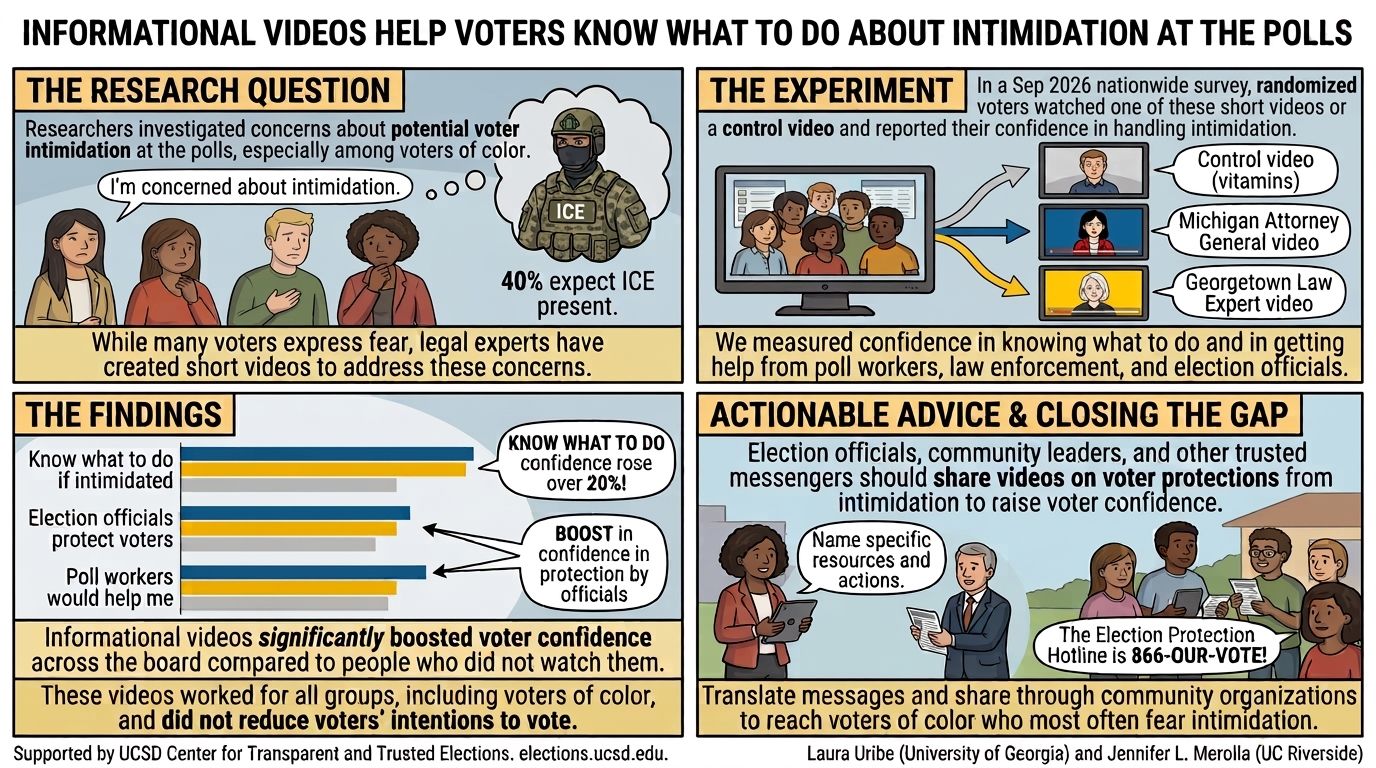
Executive Summary: Looking toward the midterm elections, 40% of Americans expect that federal immigration officials (specifically Immigration and Customs Enforcement, or ICE) will be present at a voting location in their community. Many voters are concerned that they will face intimidation at the polls, with this concern especially prevalent among Asian-American, Hispanic, Black, and multiracial voters. To address the concerns that any voter might have, legal experts have created short videos explaining voters' legal protections and what to do if intimidated. We tested these videos in a nationwide survey and found clear evidence that they increased viewers' confidence that they would know how to respond if they faced intimidation at the polls. This was true regardless of the tested messenger. By sharing short, clear "what to do" videos before Election Day, election officials and community leaders can address some voters’ concerns, especially in communities where fear of intimidation may be highest.
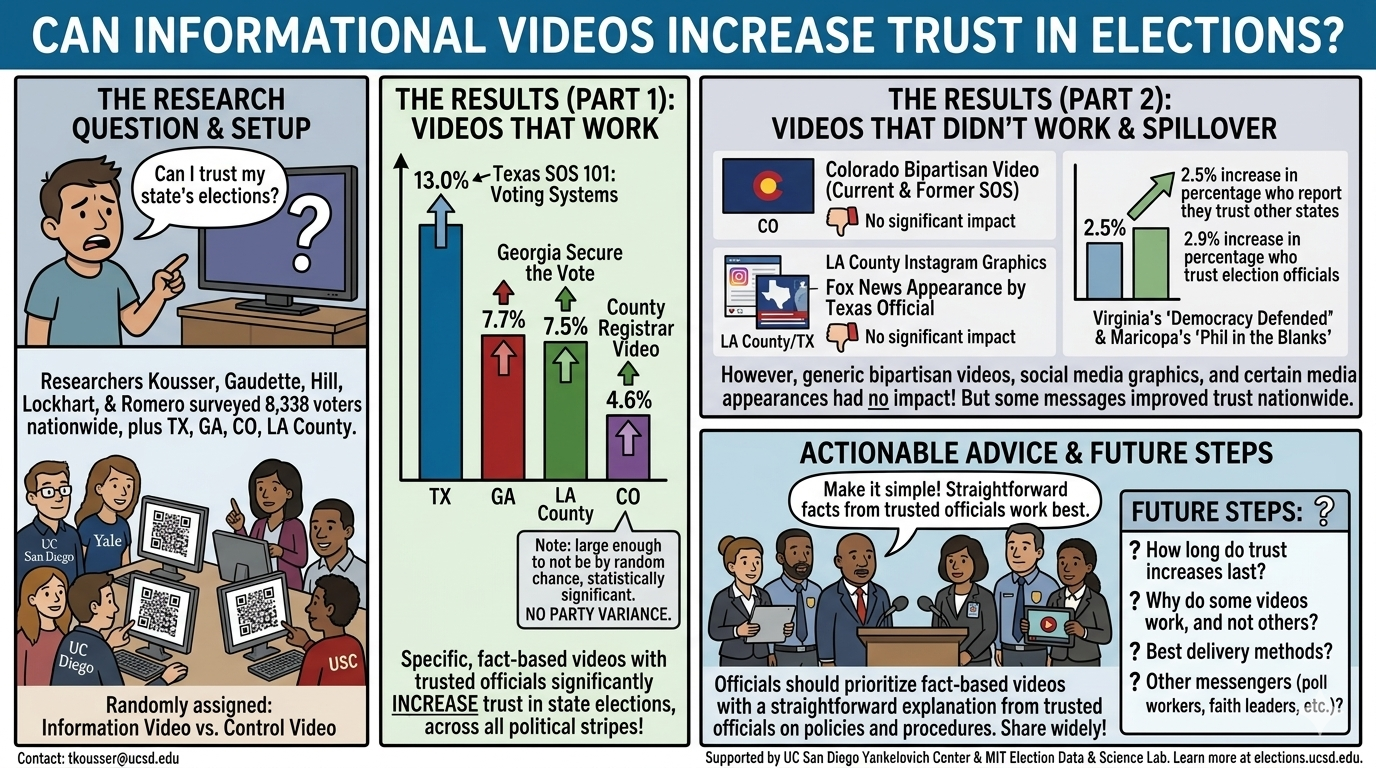
Executive Summary: Public information videos can – but don’t always – increase trust in elections. Videos can increase election trust among people of all political stripes, independents, Republicans and Democrats alike. These videos typically explain the policies, procedures, and technology that ensure that ballots are counted accurately, often featuring election officials.
Executive Summary: Tours of election facilities can increase election trust among tour participants---particularly among those who come into the tour more skeptical. Our study was located in Maricopa County, Arizona, where the Maricopa County Recorder’s Office offers guided tours. The standard tour in Maricopa County lasts about two hours. Stops along the tour include the main work room for election officials called “the command center,” the ballot vault, the tabulation center, and the warehouse. Election officials act as the tour guides and answer questions about elections along the way, with a focus on explaining the protections on the accuracy and integrity of elections.

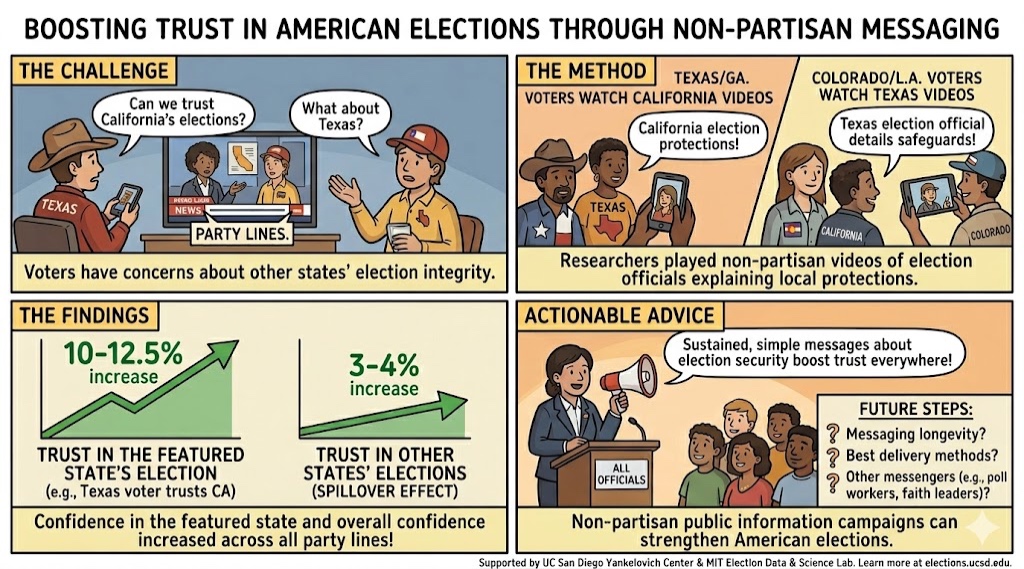
Executive Summary: Public information campaigns can boost trust in American elections across state boundaries and party lines. Non-partisan messages from election officials in one state can increase trust in that state's elections among voters in other states, regardless of party affiliation.
Executive Summary: Voters are inherently skeptical of election results released after Election Night. However simple messages explaining why election results might take time can, when presented before Election Day, prevent this decline in trust. Our study looked at what happens when you inform Americans that election results took multiple days to be reported in Arizona. We find that: 1. Learning that votes took multiple days to count makes Americans less trusting, but 2. They can be inoculated against this decline in trust through a factual message produced by election officials. The message in this video was simple, explaining that taking time to count ballots was normal and included security measures. Similar videos tailored to other jurisdictions could be made relatively inexpensively.

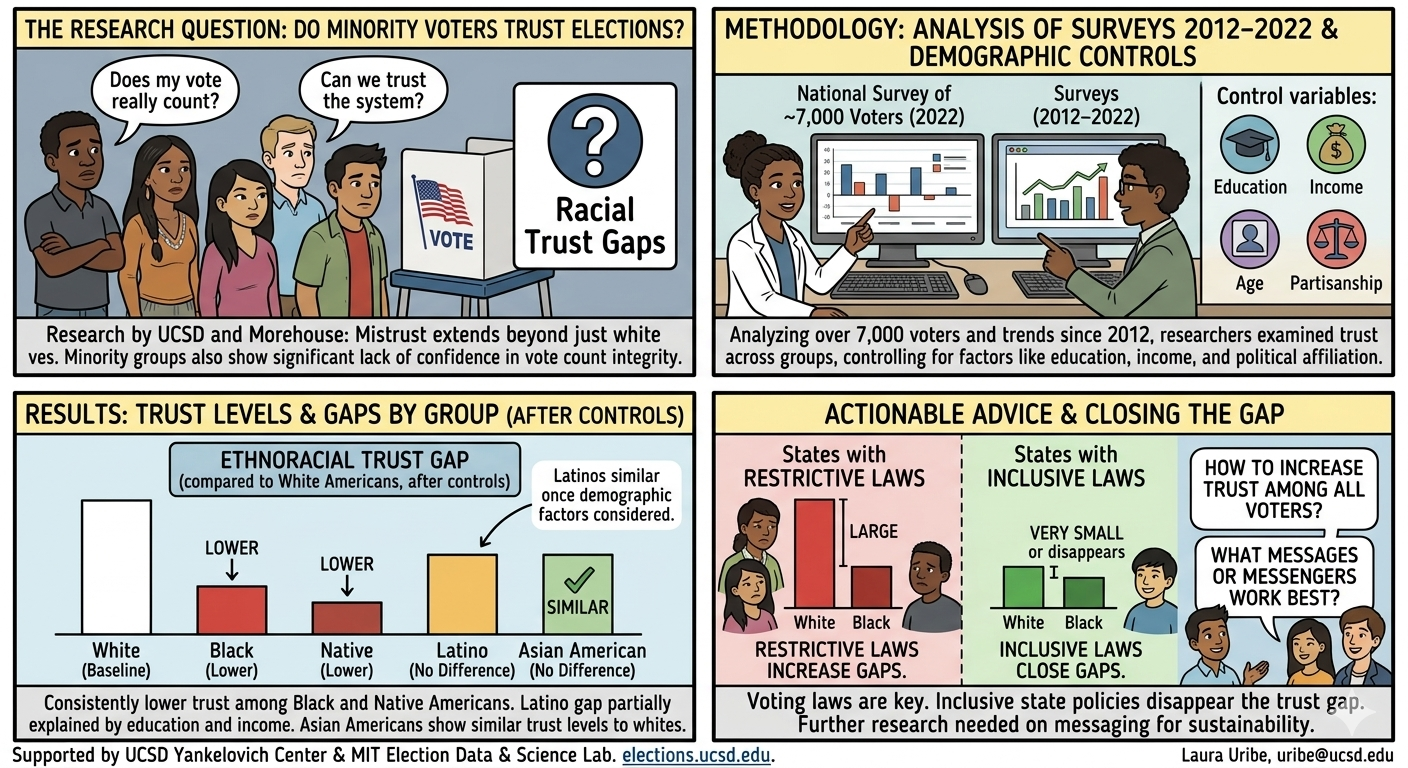
Executive Summary: Despite the focus on mistrust among white conservatives, voters from minority groups may also lack confidence in the integrity of the vote count. Analyzing surveys from 2012-2022, we find that Black and Native Americans are consistently less trusting of elections than white Americans, holding all else equal. Asian Americans have similar levels of trust to whites, and trust gaps for Latinos can be partially explained by demographic factors like education and income. State voting laws play a crucial role: in states with restrictive voting policies, the trust gap between Black and white Americans grows, whereas in states with inclusive laws, this gap disappears.
Executive Summary: Information campaigns explaining safeguards protecting elections can build the public’s trust in those elections. Conveying such information in short videos is more effective than using visual images on posters. Viewing the videos not only increases voters’ trust that their own vote will be counted as they intend, but also increases their trust in elections in their county and state. A concise video that highlights a few core protections on elections (i.e., signature verification, voter eligibility checks) produces larger increases in trust than a video that mentions these same protections and then conveys a long list of other protections.

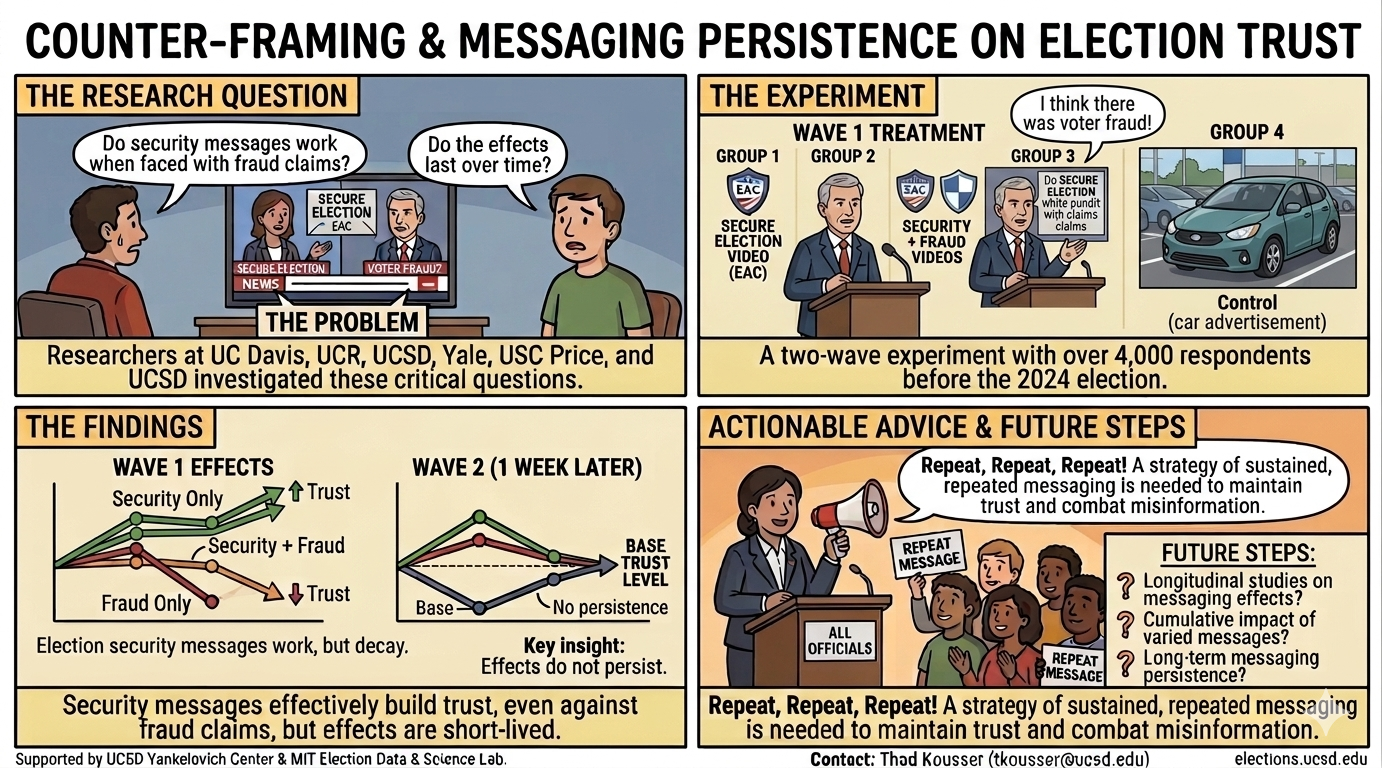
Executive Summary: We know that informational messages aimed at building trust in election systems work well on their own, but in the real world, people see competing narratives. Do official messages about election security work when presented alongside election misinformation? Do the positive impacts of election security messages persist over time? We find that election security videos increase trust, even when followed by unverified claims of fraud. However, we find the effects are not sustained when tested again a week later. This suggests that we need sustained messaging campaigns to maintain public trust in elections.